The short answer
A pitch deck or AI teaser can help a producer understand your project and decide what to ask for next. There is no reliable percentage we can assign to getting a meeting or commission. Choose each piece for the question it can answer.
What job does each piece do?
- The treatment carries the story. A reader should be able to follow the character’s choices without seeing any artwork.
- The introduction deck makes the first read quick. The full deck gives a producer more to examine.
- A platform-specific version brings the relevant audience, format and episode structure forward.
- A teaser or sequence test lets a viewer judge something that unfolds in time. A poster gives the story one recognisable image.
What does a polished image leave unanswered?
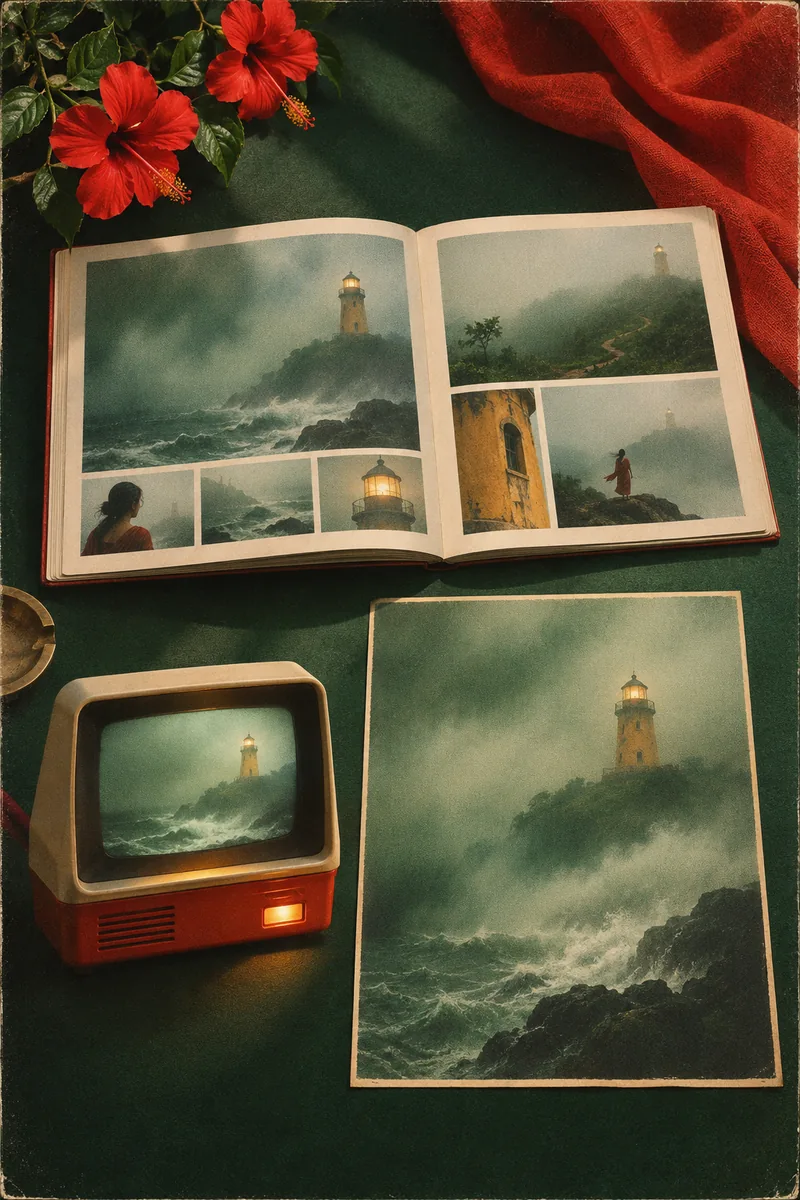
A poster can make the genre clear at a glance. It cannot tell a reader whether a character can sustain a series. A teaser can establish a rhythm while leaving unanswered how many shots a production would need and what they would cost.
Label the material by what it is. A concept portrait depicts a character in development. A sequence test demonstrates a particular piece of filmmaking. Casting and commissioning are separate facts.
How do you know the package is ready?
Give the short version to someone unfamiliar with the project. Ask them to tell you whose story it is, what changes, and why it needs the proposed format. Their answer will show where the next revision belongs.
At Pixel Bakers we start from at least a treatment. We agree which materials the project needs, then quote for that scope. A relevant request for the full treatment or a question about one scene is a useful next step.