The decks
A short introduction to send first, a full deck for a closer read, and versions tailored to the platforms you have in mind.
 Enquire ↗
Pitch development
Inside the pitch decks
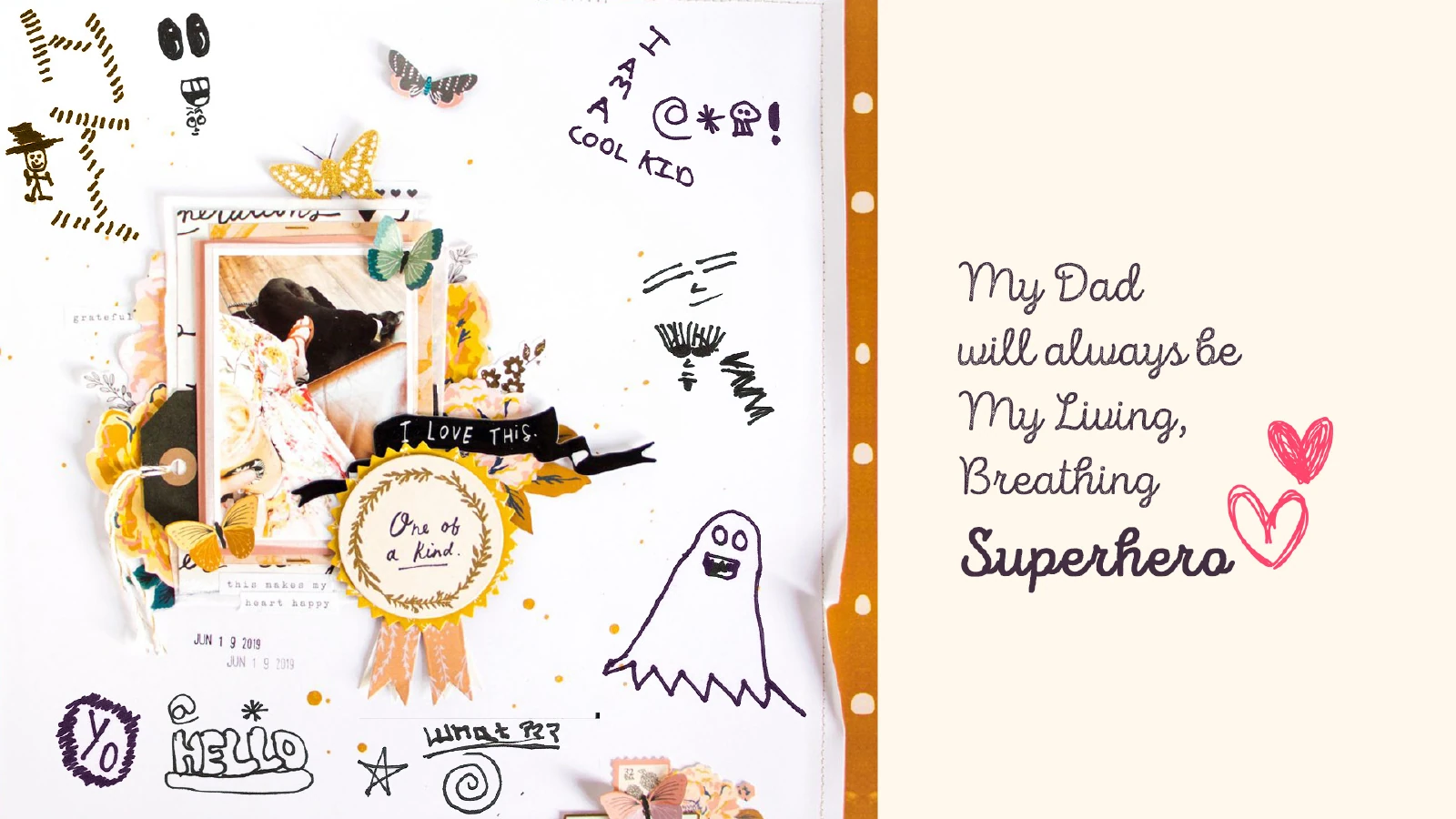
We meet the father through his daughter’s scrapbook. Her faith in him gives the action on the next page a personal stake.
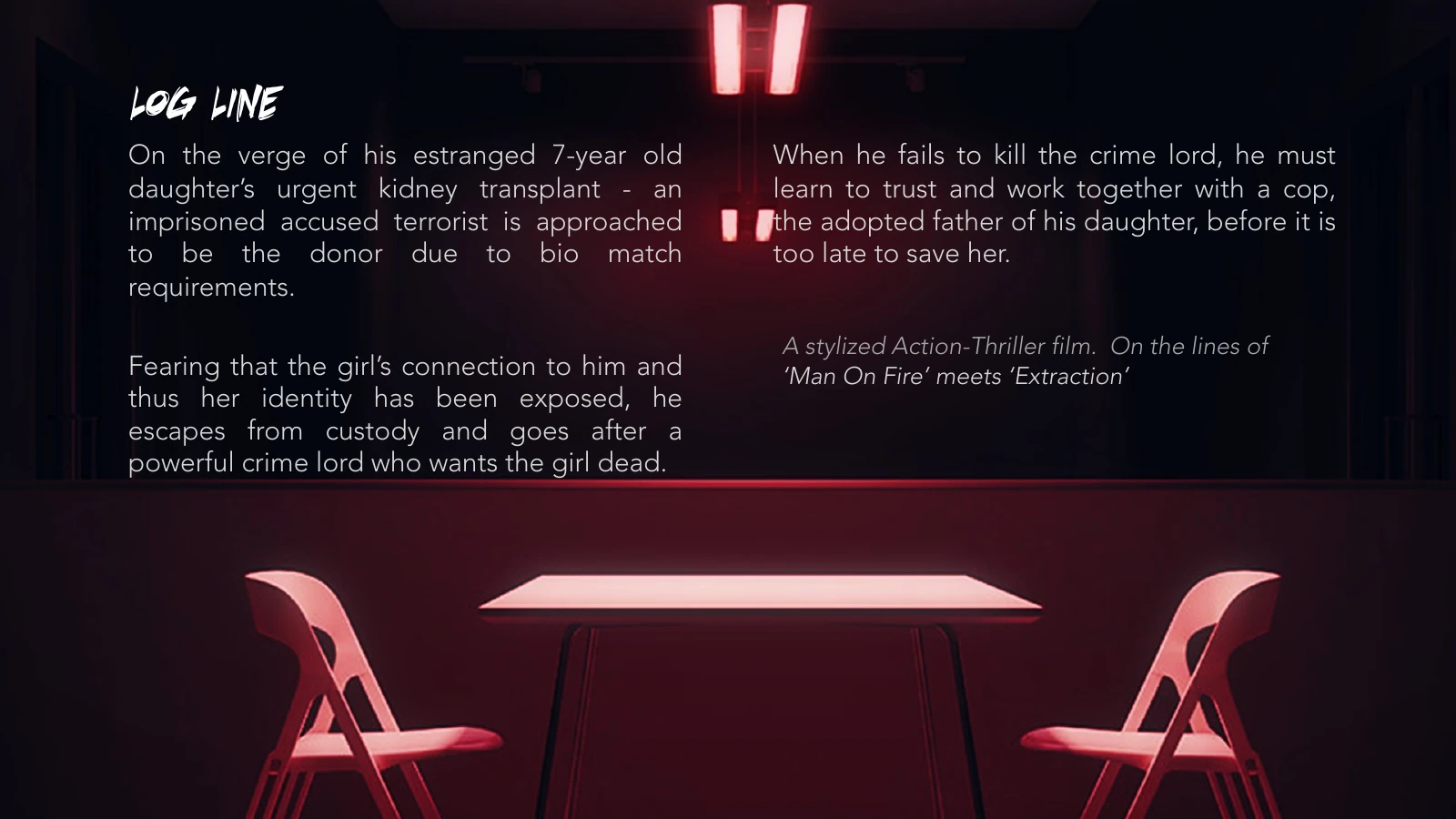
The father is in custody. His daughter needs a kidney transplant. Now the reader understands why he would risk an escape.
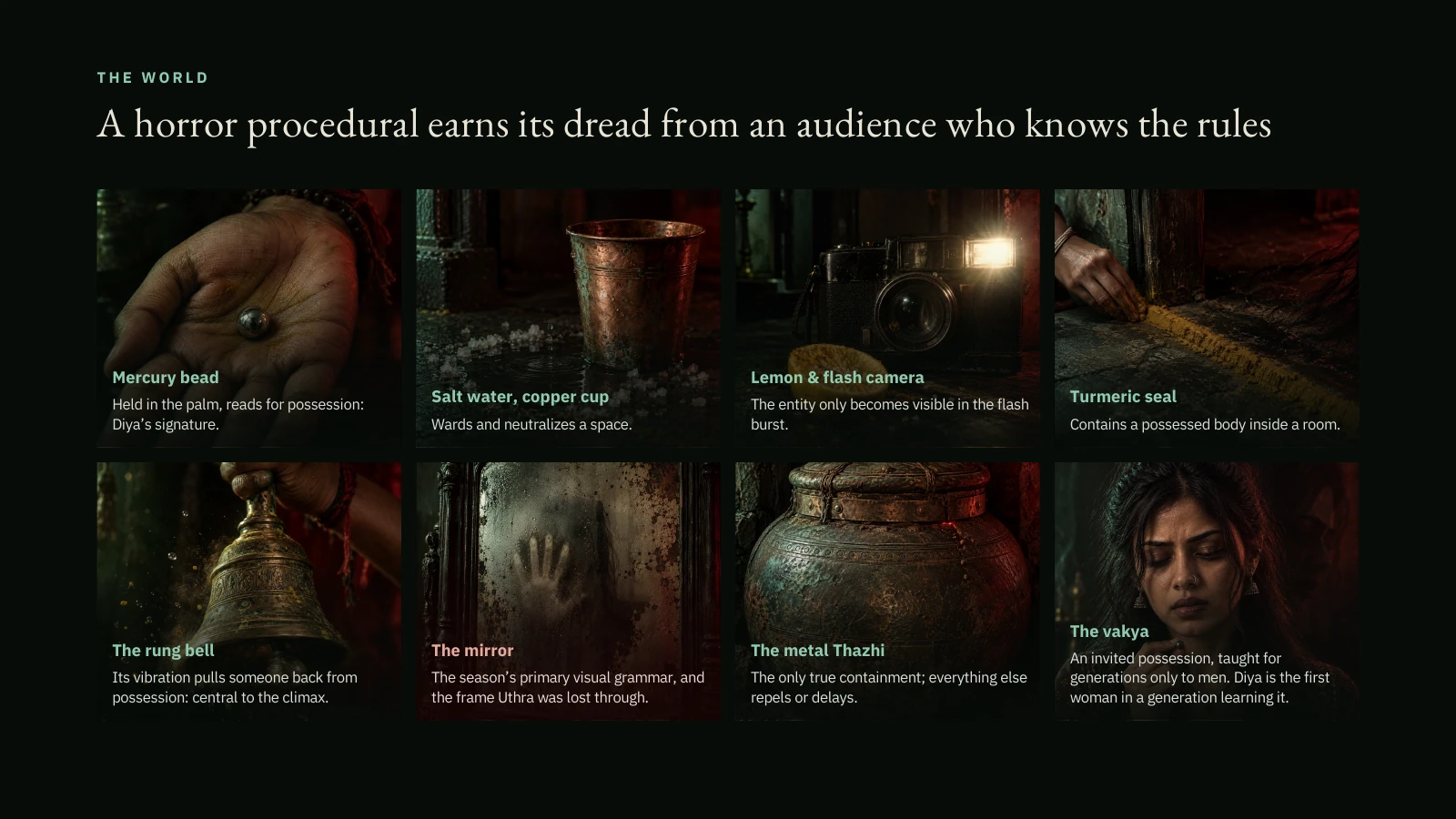
A camera flash makes an entity visible. A mercury bead helps Diya detect possession. Giving each object a rule shows how a case can unfold on screen.
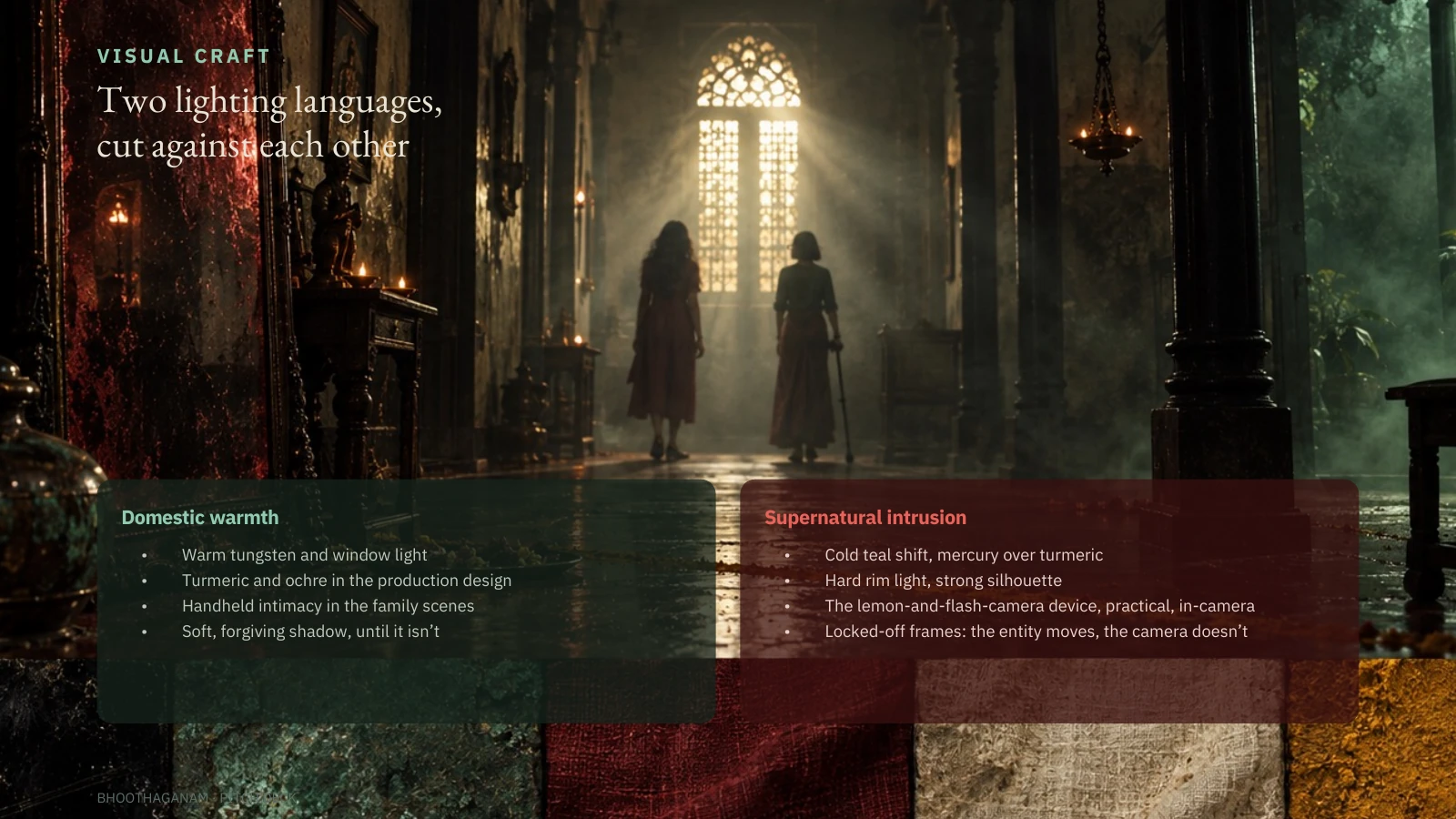
Family scenes use warm window light and a handheld camera. When an entity enters, the palette cools and the camera holds still. The director’s choices are visible on one page.
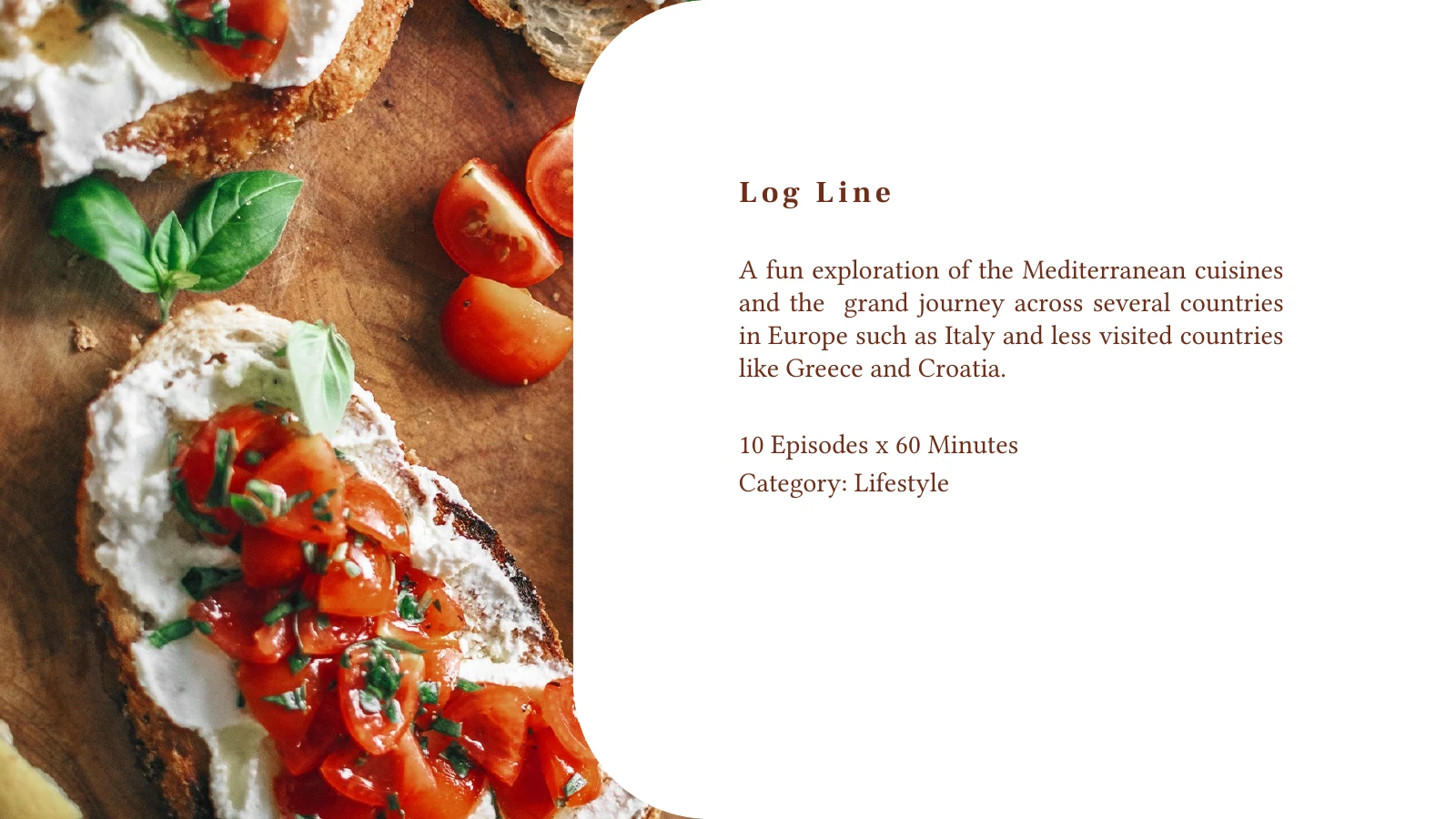
The deck sets out the proposed format alongside the food and regions the series would explore.
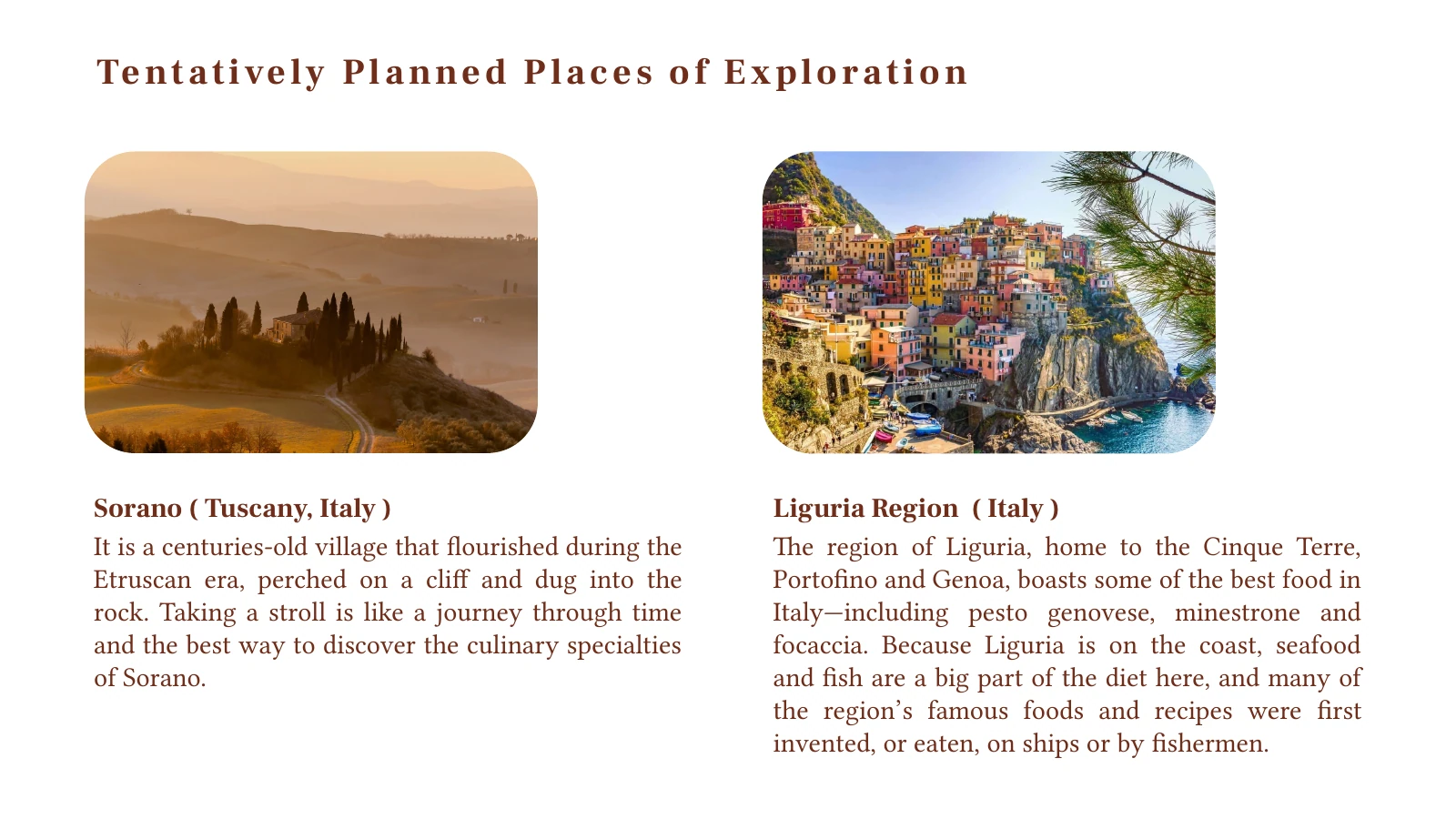
Sorano’s local dishes and Liguria’s coastal cooking give the reader two distinct stops to imagine filming.
A child’s scrapbook can introduce a thriller. Two lighting setups can explain a horror series. We work from your treatment to choose the pages, images and teaser that tell your story to a producer.
Discuss my pitch13 covers from our team’s work in film, series and pre-production. Open a cover for a closer look.
 KaaAction feature
 BhoothaganamOccult procedural
 Just MissuPre-production presentation
 The Hungry MalaysianFood & travel format
 8 BulletsAdaptation pitch
 Deepavali DiariesFestival ensemble drama
 Irai / PREYSurvival thriller
 Sita KalyanamRomantic comedy series
 AmaranSurvival horror & romance
 Uraindha UdhiramInvestigative thriller
 MaitreyaAdventure series
 Uthirndha PookkalParanormal crime series
 AmanushyamSupernatural adventure
Our pitch process
We look for the decision at the heart of the story. Together we agree who will read the pitch, what you want them to do, and which materials the conversation calls for.
We shape the logline, character arcs and synopsis into a reading order. For a series, we show what drives the next episode. You review the story on the page before we design it.
We establish a visual direction and lay out the slides. If a teaser is part of the brief, we choose a scene that shows what the writing alone can’t convey.
We read the package in meeting order with you. We check that the deck, poster and moving sample tell the same story, then prepare the editions agreed for your intended readers.
Why Pixel Bakers
Our team’s development experience includes a script selected by NFDC and work with Binger Filmlab in Amsterdam. At Pixel Bakers, our writers, directors, editors and VFX artists decide together which parts of a treatment belong on a slide and which need a shot.
For our original series Apsara, we followed Sibi’s glance from a rooftop storyboard into an AI sequence test. A reader can see how the encounter plays, alongside the treatment and artwork.
See the Apsara packageThe package
A short introduction to send first, a full deck for a closer read, and versions tailored to the platforms you have in mind.
An AI sequence can show how your story moves, sounds and feels. We choose the scene and length with you.
One image that carries the title and tone into a meeting or follow-up. The choice of image follows the treatment.
Original in development / Public sample
Treatment / Scene sample
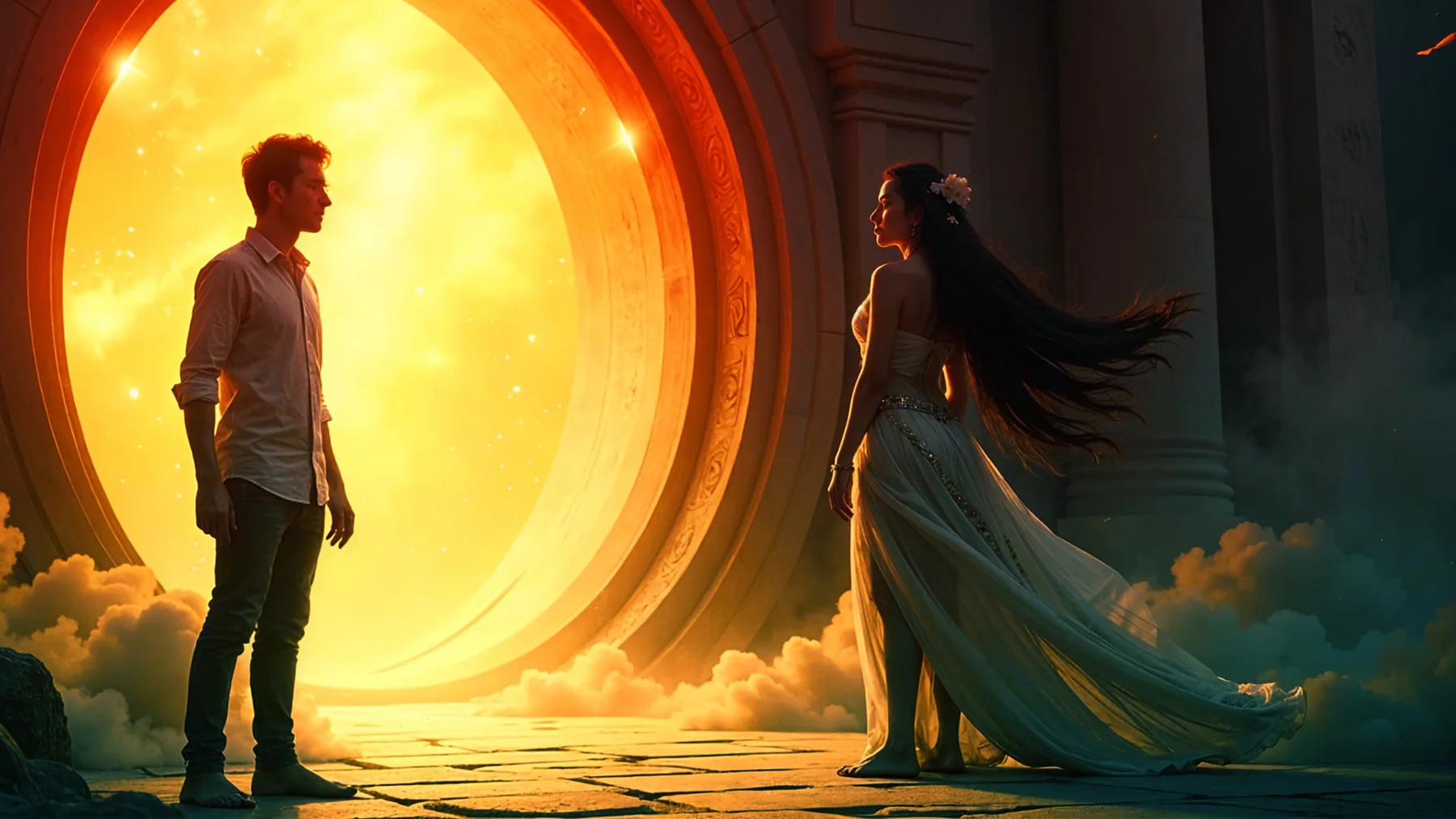
Sibi looks up. A celestial woman descends towards him. We stay with his reaction long enough to understand that this encounter has caught him unprepared.
A short adaptation for this sample.
Project deck / World

A shy college student and a visitor from this world are bound together by an accidental ritual.
The rooftop sequence test lets a reader see how Sibi’s eyeline and Apsara’s arrival cut together.
 Apsara
One encounter carries the image. The distance between Sibi and Apsara gives the reader a first impression of their relationship.
What to bring
We need at least a written treatment to begin. In your first enquiry, describe what you have and who the pitch is for.
Tell us about your projectA few useful answers
At least a treatment. Tell us the story’s current stage, its intended format and who you want to present it to. We will discuss what needs developing before the materials are created.
The ideal package includes a short introduction deck, a full project deck, versions tailored to particular platforms, an AI teaser or trailer, and a poster. The actual combination is agreed for your project.
The introduction deck opens the conversation. The full deck explains the project in more depth. Platform-tailored versions shape the presentation for a particular audience and discussion.
Yes, we can discuss full AI or hybrid production as a separately defined scope. Preparing a pitch package and producing the film are different stages, and we agree what the project needs next.
Platform outreach is optional and considered case by case. It is discussed separately from the presentation package and does not guarantee that a platform will commission the project.
Packages are quote-based. The material you already have, deck variants, teaser or trailer scope, poster work and agreed review process determine the work involved.